
Quarters

When I was a tween, I got a job at the Saratoga Drink Hall. My supervisor, a Mrs. Grunblatt, told me I’d never amount to anything because I pulled my broom towards me while sweeping rather than pushing it away. I paid no attention to her, but I did make sure to carry quarters.
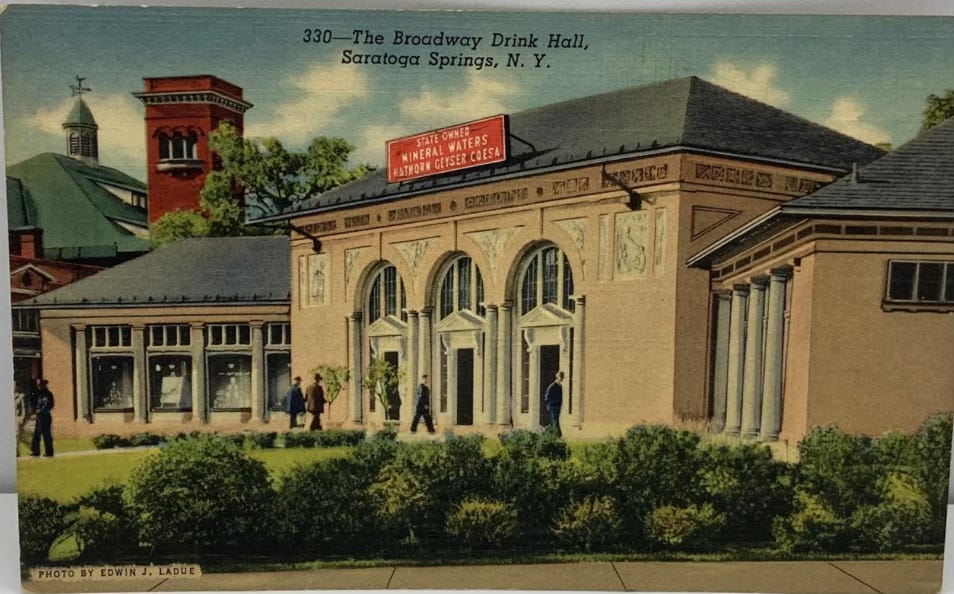
At the Drink Hall, we served a selection of bottled mineral waters from behind an antique soda fountain. It featured a long mirror, much like a Western saloon. Most visitors chose the green-labeled water, Geyser, a natural club soda excellent for upset stomachs or as a mixer for Scotch. Drinking Geyser water was a “go”.
A few tourists tried Coesa water, a mild laxative with a salty taste and a yellow label suggesting “caution”. However, the elderly immigrant Orthodox Jews from New York City, who came to Saratoga for the mineral baths, only drank the third option: Hathorn water. This was a full-out purgative with a salinity 1/10th that of seawater. Hathorn bottles sported red labels that essentially implied: “Stop. Proceed at your own risk.
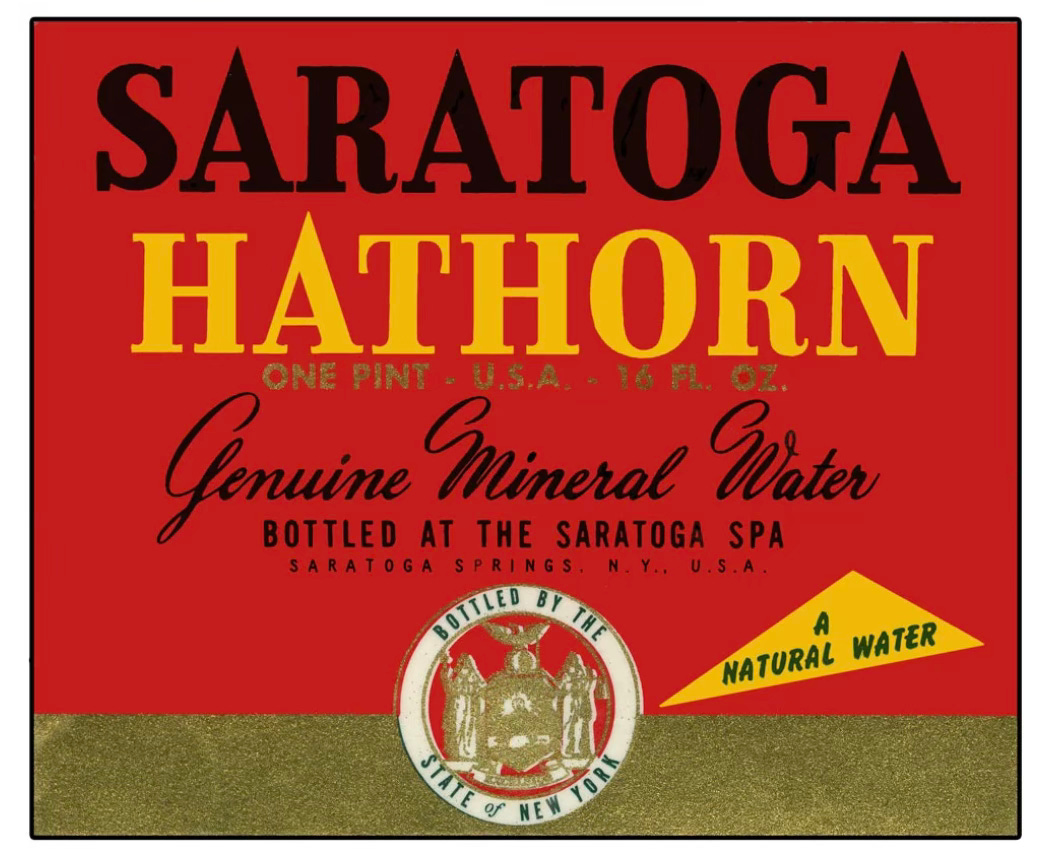
The old folks would come in every morning and gulp down a full pint of Hathorn. That’s the only way you can drink it—much like taking the concoction your gastroenterologist gives you before a colonoscopy. After finishing the water, the senior citizens chased it with a hot cup of coffee for good measure.
Inside of five minutes, the rush for the toilets would begin. Those who skipped the coffee chaser had about five hours before they’d get “the trots”—and I don’t mean at the racetrack.
The State of New York had installed pay toilets in the Drink House that cost a quarter. Given the circumstances, I still consider this practice one of the most egregious ways bureaucrats have ever designed to make money. Signs on the locked stall doors read, “Non-Payers Will be Persecuted,” a grammatical error that played to the sensibilities of a clientele who knew all about persecution and didn’t want any more of it.
Every week, at least one elderly person would drink a bottle of Hathorn with a caffeinated chaser, get to the bathroom, realize they had no quarter—and no time to find one. Desperate, they’d try to slide under the stall door, get wedged in place, and invariably soil themselves. I wound up comforting them as best I could during the extraction and mopping the mess off the bathroom floor afterward. Over and over this happened, until I finally decided to hand out quarters from my own pocket along with the coffee.
One late afternoon, a V-shaped man and his entourage entered the hall. He stepped to the bar, his muscles straining against a fishnet shirt. I recognized him immediately: Emile Griffith, the welterweight boxing champion of the world, in town for a fight at the Convention Center. He was one of my sports heroes; I used to watch him battle on TV with my dad.
“So kid, what’s to drink?” the great fighter asked.
I brought out the three waters and mumbled my description of Hathorn, trying to ensure he wouldn’t choose it.
“I’ll take the Hathorn,” Griffith said.
I reached for a bottle, assuming that as long as he didn’t drink the entire salty pint and follow it with hot coffee, he’d be fine through the early rounds of the fight. He might suffer some cramps while bobbing and weaving later, but he probably wouldn’t crap himself on national TV and lose.
But what if I were wrong? For once, my undeveloped teenage mind hit on a rational idea. I thought, “Maybe I shouldn’t let Griffith drink Hathorn before his fight—he might come looking for me afterward”.
“Sir, you won’t like Hathorn,” I said. “It’s really salty. Only locals like it. Please, take the Geyser water. It’s delicious and bubbly, and I want you to like our water”.
He deferred. Nobody told Emile Griffith what to do, but I kept at it until he finally agreed.
Emile won the fight that evening. However, in his next match, he killed Benny Paret after the referee failed to stop the match when Paret could no longer defend himself. The boxing authorities then came up with the eight second rule if a fighter became incapacitated to prevent it from happening again. Looking back, maybe I should have just let Griffith drink the Hathorn and hidden from him later.
The State of New York eventually found radium in Saratoga’s natural mineral waters and closed the bottling plant, but you can still sample Geyser, Coesa, and Hathorn waters from spouts in the State Park. Don’t worry about the radium; the concentrations are far too low to hurt you.
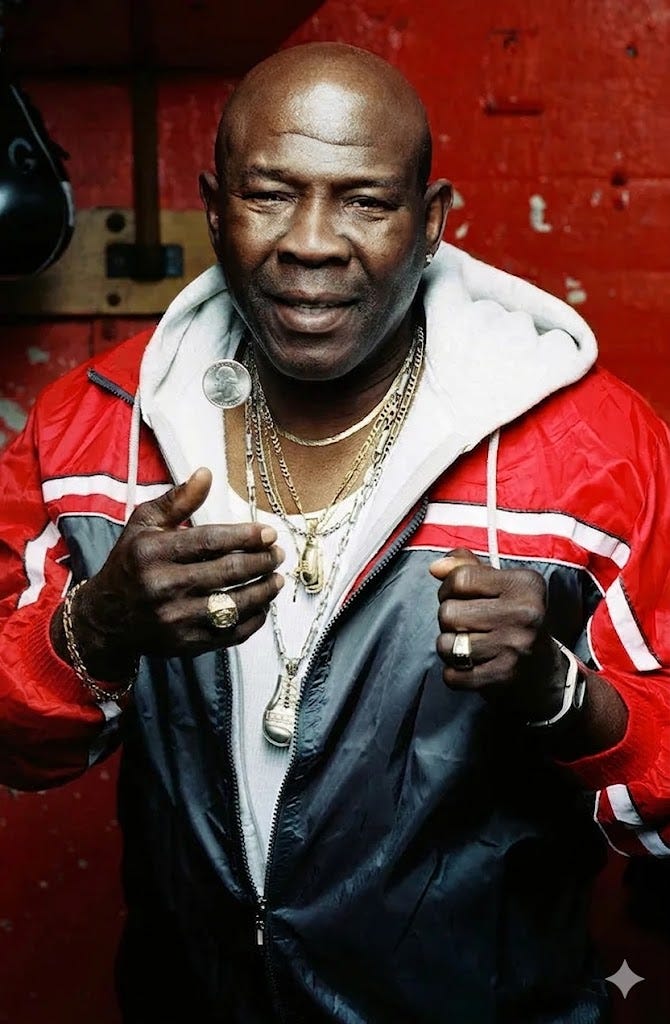
Just remember: always keep a few quarters in your pocket, just in case you find yourself facing a pay toilet. An older and wiser Emile Griffith—shown in the photo here courtesy of Gemini AI—carried them
Always have a few quarters in your pocket just in case you only can find a pay toilet later. An older and wiser Emile Griffith in the photo shown carries them now, courtesy of Gemini ai.
Thanks Don. I had to wash my hands after reading this. However, I did watch the fight when Griffith took out Benny the Kid Paret. It was awful. At the weight in Paret called Grifith a faggot in Spanish. Griffith did want to hurt/punish him. They changed a few rules after that fight. lightly heavier gloves and a mandatory eight count after a knock down.